
Why Does Everything Still Feel So Expensive?. Financially Enabled #138 August 6th, 2026

This week’s money news had a little bit of everything: The Fed kept interest rates steady, which means borrowing is still pricey but savings accounts can still earn a decent return; inflation cooled slightly, though everyday costs continue to stretch household budgets; mortgage rates climbed again, making homebuyers think twice before falling in love with that “perfect” kitchen; the job market remains active but slower, so focused applications and real connections matter more than sending out 50 résumés into the void; and yes, even quartz countertops got pulled into the tariff conversation, proving that global trade can somehow find its way into your renovation budget. The big takeaway? Stay informed, plan with today’s numbers, and don’t let dramatic headlines make decisions for you.
For more simple, practical money tips and conversations that actually make sense, come join my Skool community, we’d love to have you there!

The Fed Hit Pause, but Borrowing Is Still Expensive
The Fed left rates alone. Your credit-card company probably won’t celebrate with you.
The Federal Reserve kept its benchmark interest rate between 3.50% and 3.75% at its July meeting. Most officials voted to hold steady, although three wanted a small increase.
That disagreement matters. It tells us inflation is still making policymakers nervous, even though the economy and job market are holding up reasonably well. Energy costs and other supply pressures are keeping prices higher than the Fed would like.
For regular people, a rate pause doesn’t suddenly make borrowing cheap. Credit-card APRs, personal loans, and other variable-rate debt may stay painful for a while. On the brighter side, savings accounts and money-market accounts may continue paying decent interest.
The main lesson? Don’t build your financial plan around a rate cut that hasn’t happened. Work with the numbers you have now, not the ones you hope to see later.
What rate is affecting you most right now: your credit card, mortgage, car loan, or savings account? Reply and let us know.
“Plan around today’s rate, not tomorrow’s rumor.”
When borrowing costs stay high, the gap between what you earn on savings and what you pay on debt becomes important. A savings account earning 4% is helpful, but it won’t outrun a credit card charging 24%.
That doesn’t mean emptying your emergency fund to pay off every balance overnight. Keep a basic cushion, cover your essentials, and then focus extra money on the most expensive debt.
This week, write down the interest rates on your three biggest accounts. You may be surprised by what you find. From there, automate one small extra payment or move idle cash into an account paying a better rate. It doesn’t need to be dramatic. A boring, repeatable move is usually better than waiting for the perfect financial moment.

Inflation Eased a Bit, but Americans Kept Spending
Prices dipped for a month. Spending didn’t get the memo.
The latest government data offered a little good news and one familiar warning.
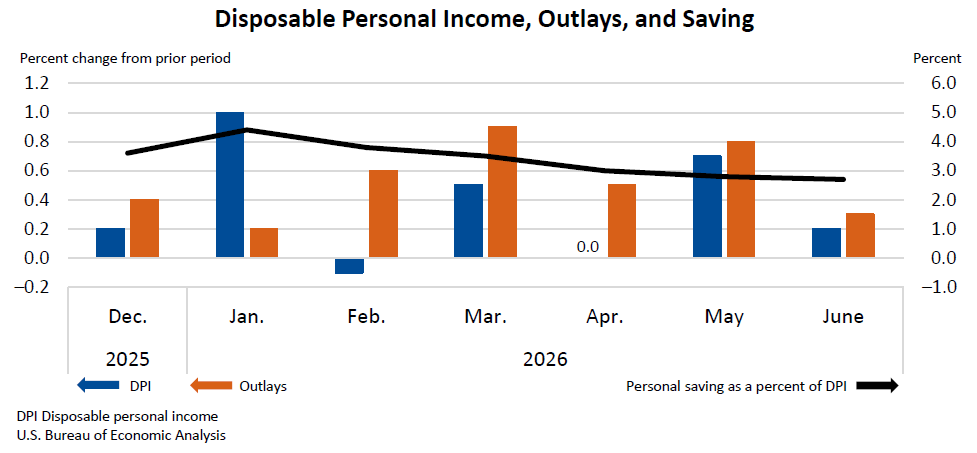
Personal income rose 0.2% in June, while consumer spending increased 0.3%. After adjusting for inflation, spending was up 0.4%. The PCE price index, the inflation measure the Fed watches closely, fell slightly from the previous month, but it was still 3.7% higher than a year earlier.
So yes, inflation cooled for the month. But prices are still much higher than they were a year ago, and households are still spending a large share of what they earn. The national personal saving rate came in at just 2.7%.
That number doesn’t mean every person is reckless with money. Plenty of people are simply paying more for basics. Groceries, insurance, rent, travel, and the endless stream of subscriptions can eat through a paycheck surprisingly fast.
Also worth remembering: lower inflation doesn’t mean prices are going back to what they used to be. It only means they’re rising more slowly.
Share this with the person who keeps saying, “Why does everything still feel so expensive?”
“Slower price increases are helpful, but your old grocery bill isn’t coming back.”
A single month of softer inflation is encouraging, but it doesn’t erase years of higher prices. Your budget has to work with current costs, even when those costs feel unreasonable.
Try not to turn budgeting into punishment. Start with one realistic weekly spending number for groceries, dining, transportation, and small extras. Then set up a modest automatic savings transfer before the weekend starts.
Take a look at three recurring charges, too. Cancel one, downgrade one, or negotiate one. Then move that money toward an emergency fund or another short-term goal.
The goal isn’t to become the person who never buys coffee. It’s to stop money from disappearing without your permission.
Mortgage Rates Rose, and the Monthly Payment Got Heavier
The house may be cute. The payment is less charming.
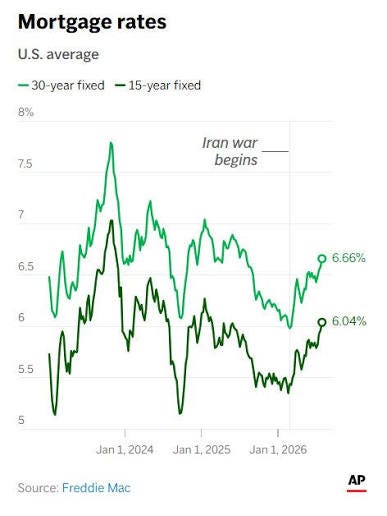
The average 30-year fixed mortgage rate climbed to 6.66% on July 30, up from 6.58% the previous week. The average 15-year rate rose to 6.04%.
That’s not a huge weekly jump, but when the loan is hundreds of thousands of dollars, even a small change matters. On a $400,000 mortgage, moving from 6.58% to 6.66% adds roughly $21 a month in principal and interest.
Twenty-one dollars may not sound dramatic. But homeownership costs rarely travel alone. Add property taxes, insurance, repairs, HOA fees, closing costs, and the appliance that somehow breaks six days after move-in, and the total can get uncomfortable fast.
There is a bit of good news: more homes are available in some markets, which may give buyers more room to negotiate. That could mean a lower price, seller-paid closing costs, or help with a temporary rate buydown.
The smartest move is to compare the full monthly cost, not just the listing price.
Send this to the friend who has 19 saved homes and has already named the future dog.
“A home should fit your life, not take over your entire budget.”
Mortgage rates matter, but they’re only one part of the deal. The price, down payment, taxes, insurance, fees, and repair costs can have just as much impact on your monthly budget.
It’s completely reasonable to rent longer, buy smaller, or choose a different neighborhood. There’s no prize for becoming house-poor with a beautiful kitchen.
Before making an offer, request loan estimates from at least three lenders. Use realistic numbers for taxes and insurance, and keep cash available after closing. Moving into a home with an empty bank account is not the kind of fresh start anyone needs.
Set a firm monthly ceiling before you tour properties. Then stick to it, even when the countertops are perfect and the lighting makes every room look like a movie set.
There Are Jobs Open, but Hiring Still Feels Slow
Millions of jobs are open. Somehow, your application is still “under review.”
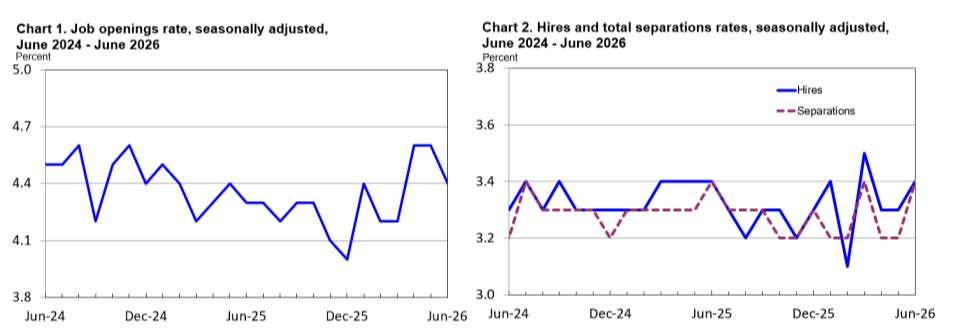
The U.S. had about 7.4 million job openings in June, according to the Bureau of Labor Statistics. Employers hired 5.3 million people, while 5.4 million workers left or lost jobs.
The labor market isn’t falling apart, but it isn’t racing ahead either. People aren’t quitting at the same pace they did during the hottest years of the job market, and companies appear to be taking more time to fill roles.
The experience also depends heavily on the industry. Openings increased in transportation, warehousing, and utilities, while some manufacturing and wholesale sectors saw declines.
That helps explain why the headlines can say “millions of jobs available” while someone spends three months hearing nothing but automated rejection emails. Both things can be true.
For job seekers, this is probably not the time for 50 identical applications. A smaller number of tailored applications, backed by referrals and thoughtful follow-up, may work better.
Share this with someone who needs a reminder that a slow search isn’t a personal failure.
“A quiet inbox isn’t always a verdict on your talent.”
Job-opening numbers show what exists across the economy, but they don’t guarantee the right role exists in your city, industry, salary range, or level of experience.
That’s why a focused search usually beats a frantic one. Pick a short list of target employers. Adjust the top section of your résumé for each role. Reach out to people you actually know or people connected to the work you want to do.
Keep a simple tracker with the company, position, date applied, contact person, and follow-up date. One thoughtful follow-up is enough. Five messages and a digital bouquet probably won’t help.
This week, apply to five strong-fit roles, contact two people in your network, and prepare three short stories that show how you solved problems at work. You’ll feel more prepared and less like you’re feeding résumés into a black hole
.
Quartz Countertops Just Became a Trade Story
Your kitchen renovation has officially entered international trade policy.
President Trump announced a four-year tariff-rate quota on certain imported quartz surface products, starting August 15.
A tariff-rate quota usually means a certain amount of a product can enter under one duty level, while imports above that amount face higher costs. The administration says the policy is meant to help U.S. manufacturers compete with imported products.
Several countries are excluded, including Canada, Mexico, Australia, and South Korea. That means the impact won’t be the same for every countertop, supplier, or renovation project.
Could some imported quartz become more expensive? Yes. But the final price will depend on where the product comes from, whether it’s already in stock, and whether the supplier passes added costs to the customer.
So no, you probably don’t need to panic-buy a countertop. But you should ask more questions before approving a quote.
Where was the material made? How long is the price guaranteed? Is it already in the warehouse? What comparable options are available?
Send this to the person whose “small kitchen update” now has six mood boards and a group chat.
“Don’t panic-buy a countertop like it’s the last ticket to a concert.”
Tariffs rarely affect every buyer in the same way. Country exemptions, existing inventory, supplier contracts, and product availability all help determine what you’ll actually pay.
The best response is preparation, not panic. Get written quotes with expiration dates. Ask whether the material is already in stock. Request one or two alternatives at different price points.
It’s also smart to keep a 10% to 15% cushion in the renovation budget. Projects have a habit of producing surprise expenses, whether they come from trade policy, delayed labor, old plumbing, or a wall that apparently has been hiding a problem since 1987.
Keep product details, quotes, and receipts together. That makes it much easier to compare substitutions and avoid paying more for something that isn’t actually equivalent.

Video of the week:
What Does God Call Success?
This episode explores how God’s definition of success differs from the world’s focus on wealth, status, fame, and achievement. Jaime and Mike discuss how true success is rooted in obedience, faithfulness, purpose, character, and alignment with God’s will. They also explain the importance of seeking God first, using your time, talents, and resources well, and staying committed even when the results are not immediate.
Before You Go
Money news gets loud fast. Your next move doesn’t have to…
Reply and tell us which story mattered most to you this week. Then forward this issue to a friend who likes staying informed but doesn’t want to read a 60-page economic report before breakfast.
Next week, we’ll break down the latest moves in rates, markets, jobs, and everyday costs and translate them into decisions you can actually use.